Snapmaker U1 3D Printer Buying Guide — Black Friday Deals 2026
A Black Friday search for the Snapmaker U1 is most useful when it starts with the work you want the printer to do, rather than with a sale label. The available details give you concrete questions to answer: whether the stated build volume suits your models, whether four independent toolheads matter to your plans, and whether the printer’s listed materials align with the filaments you intend to use. Its dimensions and weight also make placement worth considering before checkout. This guide walks through those decisions so you can judge the exact Black Friday listing and variant in front of you without assuming a discount or promotion.
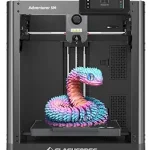
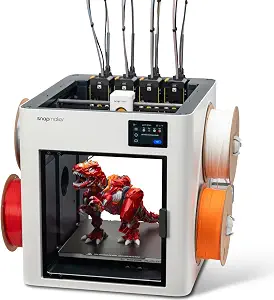
The Snapmaker U1 is a single-printer option with four independent toolheads, a stated build volume of 270 X 270 X 270 mm, and compatibility with a broad range of named materials. Those facts may make it worth investigating if your project planning involves several toolheads or materials from the listed group. The details do not establish how a particular print will turn out, so use them to narrow your shortlist rather than as a promise about results.
Best for projects planned around four independent toolheads is an editorial fit based on that stated configuration, not a claim that it is superior to other printers. During Black Friday shopping, check that the specific U1 listing reflects the model and configuration you mean to buy. Consider your own models and materials first, then compare the exact offer details shown for that listing.
Let your project dimensions set the first filter
Before weighing other features, compare the models you expect to print with the stated build volume of 270 X 270 X 270 mm. Think about the largest object you have in mind, including its overall shape, rather than relying only on a project name or a rough impression of scale. If you regularly plan different kinds of models, consider whether each one fits within the stated volume. This does not guarantee a particular design will be printable; it gives you a useful initial screen for deciding whether the listed capacity is relevant.
On Black Friday, this check can help keep a tempting offer from distracting you from the central question: does the printer’s stated space suit your intended projects? If your plans are still flexible, write down a few representative model dimensions and compare them with the listing’s build-volume specification. Avoid treating the figure as an estimate of usable space beyond what is stated. A project that does not fit your requirements should prompt a closer look at your options, regardless of the event or the offer.
Decide whether four independent toolheads fit your workflow
Four independent toolheads are a prominent part of the U1’s listed configuration. Their relevance depends on what you plan to make and how you expect to organize your printing workflow. If you have projects for which having four toolheads is a meaningful part of your decision, make that a deliberate reason to examine this model. If the feature is not important to your plans, give more attention to the build volume, materials, placement, and other details you can verify in the listing.
For a Black Friday comparison, avoid turning the toolhead count into an assumption about print quality, speed in a particular job, or the results of a specific workflow. Those outcomes are not established by the supplied details. Instead, ask whether the configuration corresponds to a real need you already have. Keeping that question specific makes it easier to distinguish an appealing specification from one that will actually guide your purchase decision.
Black Friday material planning from the compatibility list
The stated compatible materials include PLA, PVA, TPU, PETG, PCTG, ABS, ASA, PA, PC, and more. Use that list as a starting point by identifying which named materials matter to your own projects. If you already plan around one or more of them, confirm that the exact listing you are considering is for the U1 and review the compatibility details there. The phrase “and more” does not identify every additional material, so check any material not named explicitly rather than assuming it is supported.
This can make Black Friday shopping more purposeful: compare the U1’s stated compatibility with your actual material plans, not with a wish list assembled only because a deal is available. The list alone does not describe settings, print conditions, or the outcome you should expect with a particular filament. If those details affect your decision, look for them in the product information before you commit. A clear match between your intended materials and the named compatibility is a more practical reason to shortlist the printer than breadth alone.
Black Friday placement: account for dimensions and weight
The printer’s stated dimensions are 22.6 x 13 x 14.2 inches, and its listed weight is 57.9 pounds. Before ordering, compare those dimensions with the location where you intend to keep it. Check the available area against the stated measurements and consider how you will position the printer in that space. The weight is also useful information for planning how the unit will be handled when it arrives and where it will remain. These are straightforward practical checks, not claims about what furniture or room setup is suitable.
During Black Friday, it is easy to focus on the listing headline and overlook the physical commitment of a printer purchase. Pause to verify the model, dimensions, and weight on the exact product page you are considering. If you are comparing listings, make sure you are comparing the same U1 rather than relying on a shortened title. Taking a moment to plan placement can help you decide whether the product fits your workspace before an offer becomes the main focus.
Use the speed and display details as supporting context
The U1 is listed with printing speeds up to 500 mm/s and a 3.5-inch touchscreen. Read “up to” as the stated maximum, not as a promise that every print will run at that speed. Your decision should still begin with the model dimensions, materials, and toolhead configuration relevant to your projects. The touchscreen is another concrete feature to note, but the provided details do not describe its interface or functions, so avoid assuming how it will operate in a particular task.
For a Black Friday purchase, decide whether these specifications answer questions you already have. The maximum speed may be worth noting when comparing product information, while the display size can help you understand what is listed on the machine. Neither figure by itself establishes the result of a print or the overall ease of use. Treat them as supporting details alongside the features most closely connected to your intended work, and verify any further requirements in the exact listing.
Key specs
Dimensions
22.6 x 13 x 14.2 inches
Weight
57.9 pounds
Toolheads
four independent toolheads
Build volume
270 X 270 X 270 mm
Printing speed
speeds up to 500 mm/s
Touchscreen
3.5-inch touchscreen
Compatible materials
Compatible with PLA, PVA, TPU, PETG, PCTG, ABS, ASA, PA, PC, and more
Make your Black Friday choice
A sound Black Friday decision on the Snapmaker U1 comes from matching its stated details to a real plan: models within the listed build volume, a reason to value four independent toolheads, materials drawn from the compatibility list, and a place that can accommodate the stated dimensions and weight. Then review the exact listing and variant rather than assuming that a seasonal label guarantees a particular promotion. If those checks align with your needs, the specifications give you a focused basis for considering the printer; if not, take time to compare your priorities before buying.
 Check Price on Amazon