Best Bambu 3D Printer Buying Guide — Black Friday Deals 2026
What do you expect your Bambu printer to do most often: handle varied materials in an enclosed space, make multicolor projects, or simplify routine setup? Those priorities point toward different choices among the P1S Combo, P2S Combo, and A1. For Black Friday, start by matching the exact model and package to the work you have in mind rather than treating a seasonal headline as a reason to buy. The useful comparison is about the features you will actually use, the material guidance that fits your plans, and the setup details you should confirm on the listing.
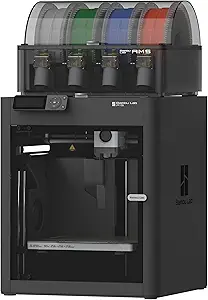
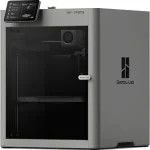
Best Overall is an editorial fit for shoppers who want a combination of an enclosure, automatic bed leveling, and a route to multicolor or multimaterial printing. The P1S Combo’s fully enclosed body is described as improving print performance for advanced filaments, while automatic bed leveling is intended to make printing easier to get started with. If your project notebook ranges from practical parts to decorative pieces, those features give you several decision points without requiring every project to use the same material or finish. During Black Friday, consider whether those capabilities match your regular plans, not just a one-off idea.
For color work, the listing describes printing in up to 16 colors and says connecting Bambu Lab AMS is required. Treat that qualification as part of the package check: confirm the exact offer and what it includes before assuming the required connection is covered. The stated filament guidance is also worth reading carefully. PLA, PETG, TPU, PVA, PET, ABS, and ASA are listed as ideal; PA and PC are listed as capable; carbon- or glass-fiber-reinforced polymer is not recommended. That guidance can help narrow the choice for a project that depends on a particular material.
This pick makes sense if an enclosed design and broad stated material guidance are central to your decision, and if multicolor is something you may use with the required AMS connection. It may be more capability than a shopper needs when the main goal is simply to begin with straightforward prints; in that case, compare the A1’s automatic calibration as another kind of convenience. Before a Black Friday purchase, check the exact P1S Combo listing, the AMS requirement, and whether your intended materials fall within the stated guidance. The Best Overall label is a fit-based editorial choice among these listed printers, not a claim of measured superiority.
Key specs
Multi-color printing
Up to 16 Colors: Bring your designs to life with vibrant multi-color/multi-material printing capabilities, perfect for showcasing your creativity. Note: Connecting Bambu Lab AMS is required.
Enclosure
Fully enclosed body improves print performance for advanced filaments.
Bed leveling
Auto bed leveling makes 3D printing such an easy thing.
Supported filament
Ideal: PLA, PETG, TPU, PVA, PET ABS, ASA; Capable : PA, PC; Not Recommended: Carbon/Glass Fiber Reinforced Polymer.
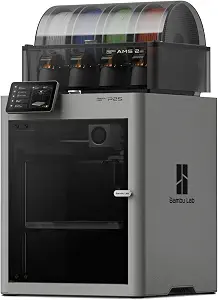
Best for Built-In Filament Drying is a useful way to frame the P2S Combo if filament drying is a priority in your setup. Its listed AMS feature provides built-in drying at up to 65 °C, giving shoppers a specific capability to weigh against their usual printing routine. The printer is also listed with a PMSM Servo Extruder and Active Flowrate Compensation. Those details may draw the attention of someone comparing the workflow features they want alongside a printer, rather than choosing solely by a headline specification. For Black Friday, first decide whether the drying feature has a practical role in your plans.
The P2S is listed as printing up to 600 mm/s. That stated speed is one point to consider, but it should not be treated as a promise about the time or outcome of any particular project. The relevant result depends on the print you plan to make, so compare the feature with your own priorities instead of assuming that a higher headline number settles the buying decision. Its listed dimensions and weight are also useful for planning a location; consult the product details and your available space before checkout rather than relying on the model name to tell you how it will fit.
Configuration deserves special attention here. The supplied product information says the P2S printer does not support multicolor printing and that the Combo version is required. Since this listing is for the P2S Combo, check the exact offer details to establish what the selected package provides before planning a multicolor workflow. Do not assume that a seasonal bundle description answers every configuration question. A Black Friday comparison should leave you clear about the model, package, and features represented by the listing. This recommendation label reflects the drying feature provided in the product information; it does not claim the P2S is the right choice for every printer owner.
Key specs
Dimensions
18 x 22 x 18 inches
Weight
46.3 pounds
Print speed
prints up to 600 mm/s
Extrusion features
the PMSM Servo Extruder and Active Flowrate Compensation
AMS filament drying
built-in filament drying at up to 65 °C
Multi-color configuration
The P2S 3D printer does not support multi-color printing; Combo version required.
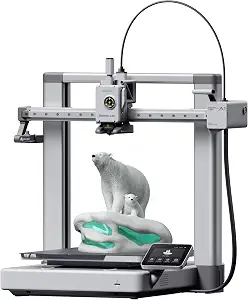
Best Budget is an editorial label for the A1 in this selection, not a statement about its current price or a promise of savings. Its listed automatic calibration may appeal if you would rather have the printer take care of calibration processes than make that part of your routine the focus. Active flow rate compensation is another stated feature to consider when comparing how you want a printer to manage its setup. For a first printer or a workspace where convenient preparation matters, these are concrete points to weigh against the features offered by the enclosed models.
The A1 also has a one-clip quick-swap nozzle, which may matter if changing a nozzle is part of the kind of maintenance or project planning you expect. For multicolor printing, the listing says AMS lite is required and directs shoppers to the A1 Combo or to buying AMS lite separately. That makes the configuration check especially important: confirm which version you are viewing and whether the required component is part of the exact offer. Do not infer package contents from a Black Friday headline or from the model name alone.
The A1 is a sensible candidate if automatic calibration and the stated nozzle feature fit your priorities, while the AMS lite qualification helps clarify what to verify for multicolor plans. Its listed dimensions and item weight should inform where you expect to put it; check those details against your own available workspace before buying. If your decision instead hinges on an enclosure or the P2S Combo’s stated built-in filament drying, compare those features directly rather than treating the Best Budget label as a universal ranking. During Black Friday, use the A1’s actual listing and configuration to decide whether this is the package that suits your intended use.
Key specs
Dimensions
21.76 x 20.83 x 12.87 inches
Item weight
22 pounds
Acceleration
acceleration of 10,000 mm/s²
Multi-color printing
AMS lite required, get A1 Combo or buy AMS lite seperately.
Calibration
The A1 3D printer takes care of all the calibration processes automatically
Flow rate compensation
active flow rate compensation
Nozzle
The 1-Clip quick swap nozzle
Write down the job before comparing printers
A short project list is more useful than a vague goal such as buying the most capable printer. Note whether your next prints are mainly single-color objects, multicolor designs, or pieces that call for a specific filament. Then mark which convenience matters most: an enclosure, automatic calibration, or built-in drying. The P1S Combo, P2S Combo, and A1 each have different listed features, so this simple exercise can prevent an attractive but irrelevant detail from deciding the purchase.
For example, someone planning decorative multicolor work should first check the AMS or AMS lite requirement attached to the chosen model. Someone prioritizing an enclosed body can focus on the P1S Combo’s stated design and material guidance. If filament drying is a key part of the desired setup, the P2S Combo’s listing gives a specific feature to compare. These are distinct questions, not interchangeable measures of quality. During Black Friday, write down your must-haves before opening multiple offers; that makes it easier to notice when a package does not match the intended workflow.
Use material guidance to narrow the field
Material plans can make a printer choice more concrete. The P1S Combo’s supplied guidance distinguishes materials described as ideal, capable, and not recommended. Read those categories as stated rather than treating them as a blanket promise for every material or project. If the filament you expect to use is important to the purchase, keep the listing’s exact wording nearby and verify it before checkout. This is particularly useful when comparing a printer feature that sounds appealing with the practical requirements of a project.
The available information does not provide a matching material list for every featured printer, so avoid assuming that one model handles a material simply because another has guidance for it. Instead, identify the material that matters, then look for confirmation in the exact product details. Black Friday promotions can make several packages look alike at a glance; slowing down to check the model-specific material notes is a more dependable way to keep a shortlist relevant. If a needed detail is unclear, do not fill the gap with an assumption.
Black Friday package checks for multicolor plans
Multicolor capability comes with configuration qualifications in the supplied facts, so treat the printer and the required color-handling component as one buying question. The P1S Combo’s information says Bambu Lab AMS is required for its stated multicolor and multimaterial capability. For the A1, AMS lite is required, with the listing pointing to the A1 Combo or a separate AMS lite purchase. The P2S information says the printer does not support multicolor printing and that the Combo version is required. These distinctions matter more than a broad description of a bundle.
On Black Friday, inspect the exact model name, variant, and package contents on the offer you are considering. Confirm whether the required component is included or whether the listing describes a separate purchase; do not assume either answer based on the word “Combo” alone. If color printing is only a possible future project, decide whether you want to pay attention to that configuration now or prioritize a feature you will use immediately. The goal is to compare like with like and avoid building a plan around a component the selected offer may not provide.
Choose the convenience feature you will notice
Convenience is personal, so compare the actual task each feature addresses. Automatic bed leveling on the P1S Combo and automatic calibration on the A1 may be relevant if setup is a concern. The A1’s active flow rate compensation and one-clip quick-swap nozzle offer additional named features to consider. The P2S Combo’s built-in filament drying and its listed extrusion features may be more relevant to someone whose routine gives those details a meaningful role. A feature is useful when it answers a need you recognize, not merely because it appears in a product description.
Imagine reviewing your usual process: which step do you want the printer to handle, and which feature would make a difference to the projects you actually plan? Keep that answer specific. During Black Friday, compare the selected package against that priority rather than letting a long feature list turn into a general contest. If two options still seem close, return to the project list and note which one has the relevant, clearly stated feature. The available facts support these distinctions, but they do not establish a universal winner for every kind of printing.
Check placement and listing details before checkout
A printer needs a suitable place in your workspace, so consult the listed dimensions and weight for the exact model you are considering. Think about where it will sit and whether that location works for your routine. The three listings provide different dimensions and weights; the template presents those specifications, so use them directly rather than estimating from photographs or the product name. If you are comparing offers on a phone or a small screen, revisit the full product details before making a final decision.
A Black Friday offer is worth considering only after you know which printer and configuration it describes. Confirm the exact model, review the included package details, and revisit any relevant requirements for AMS or AMS lite, drying, or material guidance. Compare the offer as presented rather than assuming that a seasonal promotion guarantees a particular discount, accessory, or package. A careful check can also surface a mismatch between your planned use and the features listed. If key information is unclear, pause instead of treating an assumption as a confirmed inclusion.
Make your Black Friday choice
For a final decision, match your main project need to a stated feature: the P1S Combo’s enclosure and material guidance, the P2S Combo’s built-in filament drying, or the A1’s automatic calibration and nozzle feature. Then check the exact package, any multicolor requirements, material notes, and workspace details on the listing. Black Friday is a useful moment to compare offers, but the right choice is the configuration that fits your plans—not a headline on its own. peakaboo’s labels are editorial signposts among these three options, so let your own checklist make the final call.