PNY NVIDIA GeForce RTX™ 5070 OC Triple Fan Buying Guide — Black Friday Deals 2026
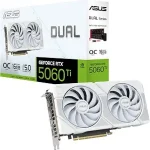
A Black Friday search for an RTX 5070 can surface listings that look similar while describing different cards. Start by identifying the exact PNY NVIDIA GeForce RTX™ 5070 OC Triple Fan, then use its listed specifications to make a decision that fits your priorities. The details here establish its memory, boost speed, interface, outputs, thickness and fan count; they do not establish how it will perform in a particular system or whether an offer is worthwhile. Keep your own build plans and the exact listing in view as you compare.
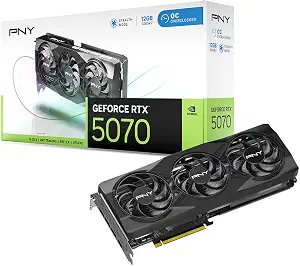
This PNY card is listed with 12GB GDDR7 memory, a 192-bit memory bus and a boost speed of 2587 MHz. Those are distinct pieces of information: memory type and capacity describe the listed memory configuration, the bus is another memory specification, and boost speed is a clock figure. They can help you compare product details without serving as a promise about results in a specific game, application or workload. For a Black Friday shortlist, record the full model name and these specifications together rather than relying on “RTX 5070” alone.
The listing also identifies a PCIe® 5.0 interface, HDMI®/DP 2.1 outputs, 2.4-Slot thickness and three fans. That gives shoppers concrete details to check against their intended connections and available space, while leaving questions about system fit or other characteristics to be verified for the individual build. The Triple Fan name describes a configuration, not a measured cooling or noise outcome. This is a useful pick for shoppers who specifically want a listed three-fan RTX 5070 configuration, provided they confirm the rest of the card’s details and their own requirements before deciding.
Use the memory specifications as comparison notes
The 12GB GDDR7 memory and 192-bit memory bus give you two concrete entries for a comparison sheet. Keep them attached to the exact PNY model name, especially when Black Friday search results place several RTX 5070 listings side by side. These figures describe the card’s stated memory configuration; they do not, by themselves, tell you how a particular title or creative application will behave. If you have a specific workload in mind, look for information relevant to that workload rather than treating one memory number as a complete performance forecast.
A practical way to use these details is to note what you already know you need, then compare each candidate’s published specifications against that list. Avoid treating GDDR7, capacity and bus width as interchangeable terms: each names a different aspect of the provided specification. This keeps your decision grounded in what the listing actually states. During Black Friday, that discipline also helps distinguish an exact model match from a result that shares only the RTX 5070 family name.
Put the boost-speed figure in its proper place
The listed boost speed is 2587 MHz. It is a specific product figure worth recording, but it is not a guarantee that every system or task will reach a particular outcome. Shoppers comparing cards can use it as one point of identification and comparison while keeping other questions—such as expected results in their chosen software—open until they find relevant evidence. The supplied specification does not provide a direct comparison with another card, so avoid reading it as proof of an advantage.
For a Black Friday decision journal, write down the exact model, the boost-speed figure and the other specifications you care about in separate fields. That small step reduces the chance of remembering a headline number while overlooking the product variant it belongs to. If speed is central to your purchase, assess it alongside your intended use and any reliable information you consult for that use. The figure is useful as a stated specification, not as a substitute for a workload-specific expectation.
Check the interface and display outputs against your plan
PCIe® 5.0 is the listed interface, and the listed video outputs are HDMI®/DP 2.1. Those details give you a starting point for checking the card against the connections you intend to use. Before buying, identify what your system and display setup require, then confirm that the particular listing and your own components align. The specifications provided here do not establish compatibility with every system or display, so treat that check as specific to your planned configuration.
This is especially useful when comparing Black Friday results that use similar product names. Note the interface and output wording exactly instead of assuming that a shared GPU family name means every listing has the same configuration. If you use multiple displays or have a particular connection arrangement in mind, verify the details that matter to that arrangement before checkout. The provided output label is a useful point of reference, not a description of every possible display setup.
Account for the stated thickness in your build review
The card is listed as 2.4-Slot thick. Use that wording as a prompt to review the space available in your own build rather than assuming the card will fit. Check the requirements of your case and the layout of nearby components using information relevant to your system. The supplied facts do not give card length or other dimensions, so do not treat the thickness figure as a complete physical-fit answer.
When a Black Friday offer is tempting, it is easy to focus on the model and forget the practical installation question. Make space a separate decision item: confirm the dimensions and clearance you need from appropriate product and system information, then compare those needs with the exact card listing. This approach keeps the 2.4-Slot specification useful without stretching it into unsupported claims about fit in a particular case.
Treat the triple-fan design as a configuration preference
The product name and listing identify three fans. That is a clear configuration detail for shoppers who are looking specifically for a triple-fan card. It does not establish noise levels, temperatures or cooling performance, so those qualities should remain questions rather than assumptions. If fan count matters to your build or preference, compare this detail directly with the specifications of any other exact model you are considering.
A Black Friday comparison works best when it separates confirmed attributes from hoped-for outcomes. Here, the fan count is confirmed; the effect it may have in a particular setup is not established by the provided facts. Consider it alongside the card’s listed thickness and your own build plans, but verify physical fit independently. That gives the triple-fan description a useful role in your choice without turning it into a performance promise.
Key specs
| Memory | 12GB GDDR7 |
| Boost speed | Boost Speed: 2587 MHz |
| Memory bus | 192-bit |
| Interface | PCIe® 5.0 |
| Video outputs | HDMI®/DP 2.1 |
| Card thickness | 2.4-Slot |
| Fans | Number of Fans 3 |
Make your Black Friday choice
For this RTX 5070, the decision can stay focused: confirm the PNY NVIDIA GeForce RTX™ 5070 OC Triple Fan variant, compare its stated memory and boost details with your priorities, and check the interface, outputs and physical requirements against your own setup. During Black Friday, judge the exact offer and listing rather than assuming that a seasonal headline guarantees a particular saving or that every similarly named card is identical. The specifications provide a solid identification checklist; your use case, fit checks and offer comparison complete the decision.