Best Monitor Buying Guide — Black Friday Deals 2026
A monitor choice begins with the shape of your routine: focused everyday work, a mix of tasks, or a wide gaming-oriented setup. This guide brings together a compact Full HD Philips, a 27-inch Dell IPS display and a curved Sceptre ultrawide, each with a different set of listed specifications. Black Friday can make it tempting to decide by headline price alone, but a useful comparison starts with the exact model and the features you will actually use. Consider your desk, connected devices and preferred screen format before weighing an offer. The recommendations are editorial choices among these three monitors, not claims of testing or market-wide rankings.
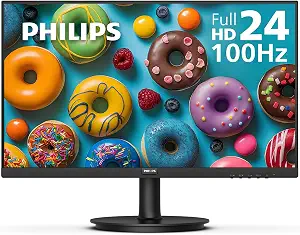
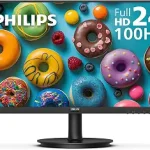
Philips 24 Inch Computer Monitor FHD 100Hz VA VESA Flicker-Free, 241V8LB
Philips 24 Inch Computer Monitor FHD 100Hz VA VESA Flicker-Free, 241V8LB (ASIN B0C8ZKV5R9)
The Philips 241V8LB is the Best Budget choice in this group for shoppers whose priorities are a straightforward Full HD screen, a 100-hertz refresh rate and flexibility in how the display is positioned. Its 23.8-inch screen has a 1920 x 1080 pixel resolution and uses VA LCD technology. That combination gives you a clearly defined set of specifications to compare against your intended desk role, whether the monitor will be used for everyday computer tasks or as a dedicated display in a compact workspace. The label is an editorial fit based on those practical priorities, not a claim about its price or a measured advantage.
Think about the way this Philips would sit in your room before Black Friday shopping begins. The listed VESA Mount compatibility gives shoppers considering a compatible mount a detail to check against their setup. HDMI and VGA are its stated connectivity options, so compare those with the outputs and cables you plan to use rather than assuming every device connects in the same way. The model’s 100-hertz refresh rate is another concrete point for a shortlist: decide whether that listed rate matters to your own use, instead of treating a higher number as a universal requirement.
The tradeoff is about fit, not a blanket judgment. Its 23.8-inch Full HD format may make sense when you want a conventional-sized screen and do not need the wider 21:9 format listed for the Sceptre. Conversely, shoppers who have already decided they want an IPS panel or a larger display may prefer to examine the Dell’s specifications. Those comparisons describe different priorities, not proof that one monitor is better for everyone. During Black Friday, check that the offer names the 241V8LB and that the variant shown is the one you mean to buy. Compare the included listing details and your connection needs before choosing, without assuming an advertised deal applies to another Philips model.
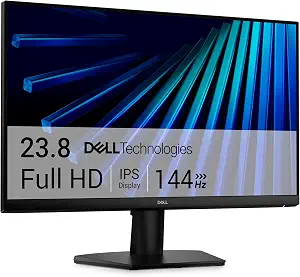
The Dell SE2726H earns the Best Overall label among these featured options because its listed specifications offer a useful middle path for shoppers who want a larger conventional screen alongside a high refresh-rate figure. It has a 27-inch IPS display with 1920×1080 resolution, a 144-hertz refresh rate and a stated response time of 1 milliseconds. This is an editorial recommendation among the products in this guide, not the result of comparative testing or a claim that it is the best monitor for every buyer. The combination is worth considering if those particular screen and panel details match your priorities.
For an everyday desk, consider whether the 27-inch screen suits your viewing space and the way you arrange windows. The resolution remains Full HD, so evaluate that specification on its own rather than assuming the larger screen changes it. The IPS panel is a specific listed characteristic for shoppers who have panel type on their checklist. Two HDMI ports may also be relevant if your planned arrangement uses HDMI connections; confirm the devices and cables you intend to connect before you order. The facts supplied do not specify other ports, so check the current product listing for any connection detail you need.
Tilt adjustment gives you a stated way to change the screen angle, which can matter when deciding how the monitor will face your chair or desk. Black Friday comparisons should keep the model name SE2726H visible throughout: a deal displayed for a different Dell screen is not automatically the same offer or configuration. Check the exact listing and its variant details before comparing prices, and base the decision on the offer actually shown. If the IPS panel, 27-inch size, Full HD resolution, 144-hertz refresh rate and HDMI connections align with your needs, this is the guide’s broad-use recommendation. If your priority is a curved ultrawide screen instead, the Sceptre’s format may be a closer match.
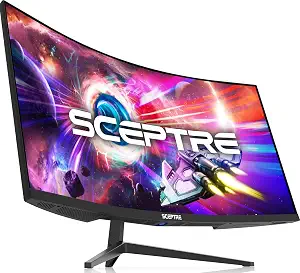
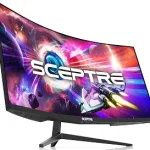
The Sceptre C345B-QUT168 is the Best for an ultrawide gaming setup pick, based on its listed curved 34-inch screen, 21:9 aspect ratio and 165-hertz refresh rate. Its resolution is 3440 x 1440, and its response time is listed as 1ms MPRT. That makes the product especially relevant to shoppers who have already decided an ultrawide format belongs in their setup and want those specifications in one shortlist candidate. The label reflects the intended use suggested by the product’s provided details; it is not a test result or a promise about gaming performance.
A 21:9 display changes the shape of the workspace compared with a conventional screen, so picture where it will go and how you expect to use the available width. The curved design is part of the stated product description, while the 34-inch screen size and 3440 x 1440 resolution help identify its format. Decide whether that wide presentation is important to your games or other activities before being drawn in by a Black Friday headline. A larger, wider display is not automatically the right choice if your desk arrangement or preferred screen shape points elsewhere.
The listed connections are two HDMI ports and two DP ports. Match those options to the devices you intend to connect, and check which cables or outputs your planned setup uses rather than guessing. The refresh rate and response-time labels are additional comparison points, but make sure you understand the specifications you value and how they relate to your own priorities. For Black Friday, verify that the listing identifies the C345B-QUT168 and the intended variant; an offer for another Sceptre monitor should not be treated as interchangeable. If the curved ultrawide format is not your main goal, compare the Philips and Dell based on their stated screen sizes and resolutions instead.
Key specs
Screen size
34 inches
Resolution
3440 x 1440
Aspect ratio
21:9
Refresh rate
165 hertz
Response time
1ms MPRT
Connectivity
2 x HDMI Port, 2 x DP Port
Black Friday decisions start with the monitor’s job
Before comparing listings, name the main role this screen needs to fill. A monitor used for general computer tasks may call for a different shape and connection plan than one chosen around an ultrawide gaming setup. The Philips offers a 23.8-inch Full HD format with HDMI and VGA; the Dell has a 27-inch Full HD IPS screen and two HDMI ports; the Sceptre is a curved 34-inch display with a 21:9 aspect ratio. Those are concrete distinctions to use when narrowing the field, rather than assumptions about which product is universally superior.
Black Friday can put several model names and offers side by side, so write down your must-haves first: screen size range, resolution, panel type, preferred refresh-rate specification, and connections. Separate requirements from nice-to-haves. If VESA mounting matters, the Philips has VESA Mount compatibility listed. If tilt adjustment is a priority, it is listed for the Dell. Do not assume a feature is included on another model just because it appears on one of these. Confirm any must-have that is not established by the facts here in the exact product listing before making a decision.
Let the screen’s proportions suit your space
The screen’s shape affects how it fits into your routine as much as its diagonal size does. The Philips’ 23.8-inch screen and the Dell’s 27-inch screen are both listed with Full HD resolution, but they are not the same physical format. The Sceptre instead pairs a 34-inch screen with a 21:9 aspect ratio and a curved design. Think about available desk space, where you sit, and whether you prefer a conventional screen or a wide presentation. These practical checks can rule out a format before you spend time comparing offers.
For Black Friday, avoid treating a larger size as an automatic upgrade. Ask whether your daily tasks benefit from the screen format you are considering, and whether the monitor can be placed where you intend to use it. The Philips’ VESA Mount compatibility may be relevant if mounting is part of your plan; the Dell’s listed tilt adjustment may matter if changing the screen angle is important. The provided Sceptre details identify its curved ultrawide format but do not specify an adjustment or mounting feature. Check the listing for any positioning requirement that matters to you.
Compare pixel detail and refresh as separate priorities
Resolution and refresh rate describe different parts of a monitor’s specification, so compare them separately. The Philips and Dell are both listed at Full HD resolution, expressed respectively as 1920 x 1080 pixels and 1920×1080. Their refresh rates are 100 hertz and 144 hertz. The Sceptre has a 3440 x 1440 resolution and a 165-hertz refresh rate. These figures help distinguish the listed models, but they do not by themselves determine which screen is right for a particular shopper.
Start by deciding what resolution and screen shape suit the tasks you have in mind. Then consider whether the refresh-rate specification is a meaningful priority for your use. The Sceptre also lists a 1ms MPRT response time, while the Dell lists 1 milliseconds; keep those stated qualifications intact when comparing them. Black Friday product pages can make a single number prominent, but a headline specification should not distract from the rest of the model details. Choose based on the set of characteristics you value, not on one figure in isolation.
Check connection and positioning details before checkout
Make a simple connection plan from the devices you expect to use. The Philips lists HDMI and VGA. The Dell lists two HDMI ports. The Sceptre lists two HDMI ports and two DP ports. Match the port types to the outputs on your intended devices, and verify any cable needs in the listing. These facts do not establish every connection detail for each monitor, so look up any additional port or accessory requirement rather than assuming it is present.
Positioning deserves the same attention. VESA Mount compatibility is listed for the Philips, while tilt adjustment is listed for the Dell. Those details may help if you already know how you want to place a screen, but they should not be read as evidence of other mounting or adjustment options. For the Sceptre, the supplied specifications identify a curved display but do not establish its positioning features. During Black Friday, check the exact model page for a feature you consider essential, then compare the offer only after confirming it applies to the intended model and variant.
Keep Black Friday comparisons tied to the exact model
A sound deal comparison is model-specific. Keep the Philips 241V8LB, Dell SE2726H and Sceptre C345B-QUT168 names attached to your notes so that an offer for a similarly named monitor does not slip into the comparison. Confirm the screen size, resolution and other must-have specifications against the listing you are considering. This guide does not establish active promotions, prices, stock or seller terms, so check those details directly in the current offer rather than relying on a general Black Friday label.
Compare the exact offer and variant, then weigh it against your own shortlist. A promotion is only useful to your decision if it applies to the model you want and the specifications fit your plans. Read the displayed listing carefully, including the model identifier and relevant configuration details, before checkout. If a price or variant changes, reassess the offer as presented. This careful approach keeps a seasonal sale from becoming a substitute for deciding whether the screen format, connections and stated features are appropriate for your space.
Make your Black Friday choice
The right monitor here depends on what you want from the screen: a compact Full HD option with VESA compatibility, a 27-inch IPS display with tilt adjustment, or a curved ultrawide with a 21:9 aspect ratio. Use those distinctions to narrow your choice, then check the connections and any positioning needs that matter to your setup. During Black Friday, verify the exact model and variant in the offer before comparing it with your shortlist. The guide’s labels are editorial recommendations among these featured products, not guarantees of performance or value. A decision grounded in your space and routine is more useful than choosing by a sale headline alone.