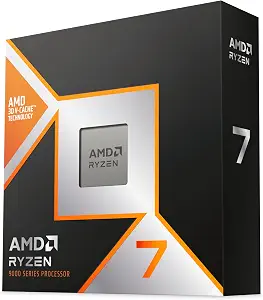
What do you need your next desktop processor to support, and what parts of the build are you prepared to choose separately? The AMD RYZEN 7 9800X3D gives shoppers a defined set of details to weigh: 8 cores and 16 threads, 96MB L3 cache, a listed processor speed of 4.7 GHz, and clock speed up to 5.2GHz. For Black Friday, the useful question is not whether a headline offer sounds compelling, but whether this exact processor fits your intended tasks, platform plans, and cooling decision.
This processor is a clear option to investigate if your desktop plan centers on an 8-core, 16-thread part with 96MB L3 cache. Those figures describe the configuration, not a guarantee about how any particular application will behave. Think through the actual sequence of work you expect: which programs you plan to open, whether several kinds of work may overlap, and what other components your completed desktop will need. That task list gives the specifications useful context instead of treating them as a performance promise. During Black Friday shopping, keep the intended use in view while you assess the exact listing.
The listed processor speed is 4.7 GHz, with clock speed up to 5.2GHz. Keep those statements distinct when reading the offer; the higher figure is specifically qualified as “up to,” and neither figure by itself describes performance in every workload. The processor uses Socket AM5, so the socket is a key checkpoint for a planned build. A cooler is not included, which means the cooling choice belongs in your separate parts and budget planning. For Black Friday, consider the complete build decision rather than treating a processor listing as the whole system.
Build a workload picture from the core and thread count
The listed 8 cores and 16 threads give you a concrete configuration to compare with the demands of your planned desktop. Start by writing down the tasks you want the machine to handle, including whether your day is mostly one main application at a time or a mix of activities. Then decide whether this processor’s stated core and thread count is a fit for the kind of system you are assembling. The count alone does not establish how quickly an application will run, so avoid turning it into a blanket claim about every task.
This is especially useful while comparing Black Friday listings: keep your needs consistent as you move between offers, rather than letting a prominent specification distract from the rest of the build. If your task list changes, revisit your choice instead of assuming the processor will suit every possible workload. The practical benefit of this approach is a purchase decision tied to your own plan, not an unsupported promise about results.
Give the 96MB L3 cache a place in your decision
The 96MB L3 cache is one of the processor’s defining listed details. Whether it matters to your decision depends on how you weigh the specifications available for this model alongside your intended applications. Treat it as a concrete point for comparison, not proof that a particular program, game, or creative task will run better. The provided information does not establish outcomes for individual software, so a careful buyer keeps the discussion at the level of the stated feature.
When Black Friday promotions bring attention to several listings, make a short comparison of the facts that are actually provided for each exact item. For this processor, note the cache alongside its core and thread count, socket, speed wording, and cooler inclusion. That gives the cache context within your overall parts plan. If you cannot connect a specification to a need you have, avoid letting the number alone decide the purchase.
Separate the base speed wording from the upper figure
The listing gives a processor speed of 4.7 GHz and also states a clock speed up to 5.2GHz. Read both as written: one is the stated processor speed, and the other is qualified by “up to.” Do not combine them into a single operating-speed claim or assume either number describes every condition. The supplied details do not explain how a specific workload behaves, so use the figures as listing information rather than a substitute for a task-specific performance assessment.
For a Black Friday decision, this careful reading also helps you compare like with like. Confirm the exact model and preserve the wording attached to each figure while you review the offer. If a listing presents information differently, pause and make sure you are comparing the same item and specification. A clear reading prevents a headline figure from carrying more meaning than the available facts support.
Make Socket AM5 a platform checkpoint
Socket AM5 is the listed processor socket, so check that detail against the motherboard and platform you intend to use before completing a parts list. This is a planning checkpoint, not a claim that the processor works with every component associated with a platform. Confirm the exact parts you have selected and resolve any compatibility questions through their respective product information before buying.
Black Friday can make it tempting to focus on the processor offer first and leave the surrounding build decisions for later. Instead, keep the socket visible as you compare listings and assemble your proposed system. If you are replacing a part in an existing desktop, identify the socket of the planned motherboard rather than relying on an assumption based on the rest of the system. The socket detail is simple, but it can shape whether this processor belongs in your parts plan at all.
Budget for cooling outside the processor listing
A cooler is not included. Plan for that separately when deciding what the complete build will require, and account for the cooler choice in your overall purchasing plan. The available facts do not specify a cooler recommendation, so do not assume a particular model or cooling arrangement is included with this processor. If you already have a cooling part in mind, verify its suitability for your planned system using the relevant product information.
This point matters during Black Friday because a processor offer is only one part of a desktop purchase. Compare the exact item and offer details, then consider the separate cooling decision alongside the rest of your planned components. Keeping those decisions distinct makes it easier to understand what the listing does and does not provide. It also avoids treating an appealing processor price as a complete estimate of what your finished build will involve.
Key specs
Processor speed
4.7 GHz
Processor socket
Socket AM5
Cores and threads
8 cores and 16 threads
L3 cache
96MB L3 cache
Clock speed
up to 5.2GHz
Cooler
Cooler not included
Make your Black Friday choice
Before you buy, confirm that the listing is for the AMD RYZEN 7 9800X3D, check Socket AM5 against your planned platform, and make sure the 8-core, 16-thread configuration and 96MB L3 cache fit the priorities you set. Read 4.7 GHz and up to 5.2GHz as separate, qualified details, and remember that a cooler is not included. For Black Friday, compare the exact item and offer rather than relying on a headline alone. If those details suit your build plan, you have a grounded basis for deciding whether to proceed.
 Check Price on Amazon