Best Chromebook Buying Guide — Black Friday Deals 2026
A Chromebook decision is less about finding a universal winner than matching a configuration to your routine. Start with the screen size and format you will want for reading, writing, and calls; then consider processor, memory, storage, connections, and any update or battery information supplied. These three options range from a touchscreen Lenovo to a larger-screen HP and a Chromebook Plus Acer with a detailed camera specification. For Black Friday, treat the sale language as a prompt to compare—not as proof that a particular configuration suits you. Check the exact model and included specifications on the offer before deciding.
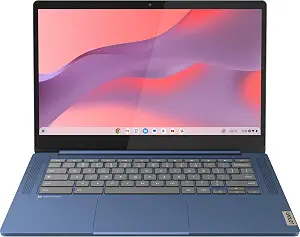
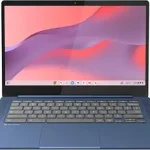
The Lenovo Flagship Chromebook is the Best Budget pick in this guide for shoppers drawn to a 14-inch Full HD touchscreen and a straightforward set of listed essentials. Its MediaTek Kompanio 520 is an octa-core processor, specified as four A73 cores at 2.0GHz and four A53 cores at 2.0GHz. The configuration includes 4GB of RAM and 64GB of eMMC storage. Those details make it particularly important to think about how much memory and local storage your routine calls for before choosing it. The Best Budget label is an editorial role among these products, not a statement about a current price or guaranteed lowest cost.
The touchscreen is a practical point of distinction if you expect to interact directly with the display as well as use the keyboard. Its 14-inch Full HD specification gives you a clear screen detail to compare with the HP’s larger stated format and Acer’s WUXGA touch display. The Lenovo listing also specifies Chrome OS, Wi-Fi 6 with 11ax 2×2, and Bluetooth 5.1. If wireless connectivity matters to your home or work setup, use those details to check against the network and accessories you actually expect to use; the listing alone does not establish how a particular environment will perform.
Lenovo lists battery life of 13.5 hours. Treat that figure as a listed specification for comparison, not a guarantee of the time you will get in your own routine. Your decision should turn on whether the stated memory and storage, touchscreen, wireless details, and battery figure fit your priorities together. A lower-cost role does not make a configuration right for everyone, and the provided details do not include a price. On Black Friday, check that the offer is for this Lenovo model and that the listed specifications match the product page before weighing the price. This pick may suit a shopper prioritizing a touch display and an explicit battery-life figure, provided the memory and storage are appropriate for their plans.
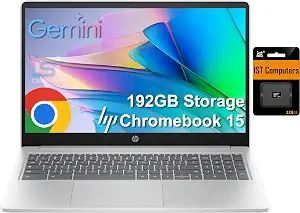
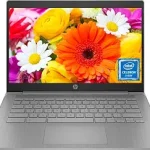
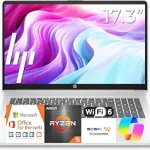
The HP Chromebook 15 is the Best Overall choice among these listings for shoppers who want a larger-screen laptop with a clearly specified memory configuration. Its 15.6-inch size, 8GB of DDR5 RAM, and Intel N200 processor with four cores give you concrete details to weigh against your everyday needs. That combination may be worth considering if your routine involves keeping several tasks in view and you prefer a larger laptop format. The listing does not provide a display resolution, so check the exact offer if resolution is a deciding factor rather than assuming one.
For calls, the HP lists an HD webcam with a privacy shutter. The shutter is a specific detail to consider if you want a physical way to cover the webcam when it is not in use; the listed information does not specify additional camera controls. Two SuperSpeed USB Type-C ports are listed, each supporting USB Power Delivery and DisplayPort 1.4. If you plan to connect or charge equipment through USB-C, compare those stated capabilities with the needs of your own accessories instead of assuming every device or setup will work as intended.
The listing gives the HP 192GB of storage, but does not identify the storage type in the provided details. Think about the files and applications you expect to keep on the Chromebook, and verify whether the stated capacity fits that plan. ChromeOS updates have an Auto Update Expiration date of June 2030, a useful planning detail when considering how long you want to use a device. It is not a promise about every future need, so weigh it alongside your intended ownership period. The Best Overall label is an editorial pick from these three products, not a claim of tested or market-wide superiority. During Black Friday, compare the exact HP model and configuration shown in the offer with these details; do not let a sale badge substitute for that check.
Key specs
Processor
Intel N200 Processor with 4-cores
Memory
8GB of DDR5 RAM
Webcam
HD webcam with privacy shutter
USB-C ports
2 x SuperSpeed USB Type-C 5Gbps (USB Power Delivery, DisplayPort 1.4)
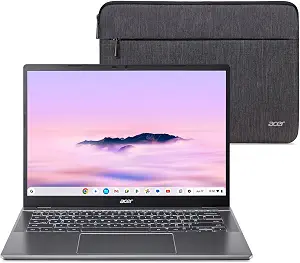
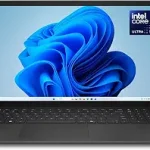
The Acer Chromebook Plus 514 earns the Best for video-call camera detail label because its camera specification is especially explicit: an FHD Facial Auto Exposure Camera with 1920 x 1080 resolution and 1080p video at 60 FPS. This label identifies a feature-based reason to shortlist it; it does not claim that the camera has been measured against other models. If camera detail is a priority in your buying decision, compare that specification with the requirements of your calls and the equipment or software you plan to use, rather than assuming a listed resolution guarantees a particular result in every setting.
The Acer pairs its camera with a 14-inch WUXGA display in a 16:10 format, rated at 300 nits, with touch and an anti-glare coating. Those are useful points to consider if you want to compare screen shape, touch input, and the stated coating as part of your daily setup. Its Intel Core i3-1315U processor is listed with six cores and eight threads, and it has 8GB of LPDDR5 onboard memory plus a 256GB PCIe Gen4 SSD. Use the complete configuration—not just the Chromebook Plus name—to decide whether it fits your intended tasks and storage needs.
For wireless use, Acer lists Intel Wi-Fi 7 with dual-stream support in the 2.4GHz, 5GHz, and 6GHz bands. It also lists two USB Type-C ports with USB 3.2 Gen 2 speeds up to 10 Gbps, DisplayPort over USB Type-C, and USB charging up to 65W. Check these stated connection details against your planned equipment and charging setup before purchase. Chrome OS is the operating system. The multiple specific features make this a useful option to compare if camera detail, display format, or port capabilities are high on your list, but they do not establish that it is the right choice for every shopper. For Black Friday, verify the Acer model and configuration on the offer; compare those details with the price you see, without assuming a promotion or a particular level of savings.
Key specs
Display
14” WUXGA 16:10 300-nits touch display with anti-glare coating
Processor
Intel Core i3-1315U Processor – up to 4.5GHz, 6 cores, 8 threads, 10MB Intel Smart Cache
Memory
8GB LPDDR5 On-Board Memory
Storage
256GB PCIe Gen4 SSD
Wireless
Intel Wi-Fi 7 supports dual-stream Wi-Fi in the 2.4GHz, 5GHz and 6GHz bands
Camera
FHD Facial Auto Exposure Camera (1920 x 1080) with 1080p Video at 60 FPS
USB-C ports
2 – USB Type-C Ports USB 3.2 Gen 2 (up to 10 Gbps) DisplayPort over USB Type-C & USB Charging (Up to 65W)
Operating system
Chrome OS
Map the Chromebook to your ordinary day
Before comparing Black Friday offers, write down what you expect the Chromebook to do most often. A shopper who mainly wants a touchscreen can put the Lenovo’s 14-inch Full HD display near the top of the list. Someone who prefers a larger laptop format can consider the HP’s 15.6-inch size. If video-call camera detail is a priority, the Acer’s specifically described FHD camera gives you a concrete feature to evaluate. These are different decision points, not proof that one device is universally better.
Next, think about how you work with a screen: Do you value touch input? Would you rather compare the Acer’s 16:10 WUXGA display with the Lenovo’s Full HD touchscreen? Is the HP’s listed screen size a stronger fit for your space? The information provided does not give a resolution for the HP, so verify that detail if it matters to you. Keeping your preferences in writing helps you avoid letting a Black Friday label or an attractive headline distract from the format you will actually use.
Match the configuration to the workload you expect
Memory, processor, and storage are easier to assess as a group than in isolation. The Lenovo lists 4GB of RAM and 64GB of eMMC storage with a MediaTek Kompanio 520 octa-core processor. The HP lists 8GB of DDR5 RAM and an Intel N200 four-core processor, alongside 192GB of storage. Acer lists 8GB of LPDDR5 onboard memory and a 256GB PCIe Gen4 SSD with an Intel Core i3-1315U. Those are the supplied configurations; the figures alone do not promise how a specific task will feel.
Ask what you plan to keep on the Chromebook and how much room you need for your files. Then consider whether the stated memory and processor configuration suits the kind of work you intend to do. The provided facts do not establish performance for a particular application, so avoid treating a processor name as a substitute for your own requirements. For Black Friday, confirm that a listing’s memory and storage match the product you meant to compare. A different configuration can change the decision even when the product family name looks familiar.
Use screen and camera details as practical filters
The screen descriptions give you several distinct features to compare. Lenovo specifies a 14-inch Full HD touchscreen. Acer specifies a 14-inch WUXGA 16:10 touch display with 300 nits and an anti-glare coating. HP’s product name identifies a 15.6-inch laptop, while the supplied facts do not state its display resolution or other screen features. If display information is central to your choice, verify the missing detail on the exact offer rather than filling it in from assumption.
For calls, the camera facts also differ in specificity. HP lists an HD webcam with a privacy shutter. Acer lists an FHD facial auto exposure camera, 1920 x 1080 resolution, and 1080p video at 60 FPS. No camera specification is provided for Lenovo in these records, which is not a reason to assume anything about its camera; check the product listing if that feature matters. During Black Friday, compare what is actually stated for the exact model against your call priorities, not an inferred difference.
Check connections, wireless, and longer-term details
Ports matter most when they match the devices and charging arrangements you plan to use. HP lists two USB-C ports with USB Power Delivery and DisplayPort 1.4. Acer lists two USB Type-C ports with USB 3.2 Gen 2, DisplayPort over USB Type-C, and USB charging up to 65W. The provided Lenovo facts do not specify its ports, so check its product details if you need a particular connection. In each case, confirm the intended accessory’s requirements instead of assuming compatibility from the port name alone.
Wireless and update information can help narrow your shortlist too. Lenovo lists Wi-Fi 6 and Bluetooth 5.1; Acer lists Wi-Fi 7 with dual-stream support across the 2.4GHz, 5GHz, and 6GHz bands. HP specifies an Auto Update Expiration date of June 2030. Lenovo lists 13.5 hours of battery life, while no battery figure is supplied here for the other two. Treat these as available comparison points, not promises beyond their stated terms. A Black Friday offer should be checked for the exact model before you rely on any of these details.
Make a Black Friday comparison that holds up
When you reach an offer page, check the product name and configuration first. Make sure the listed processor, memory, storage, display, and any feature you care about correspond to the Chromebook you are comparing. Then look at the actual price and terms shown for that offer. These records do not establish a current promotion, discount, stock level, or seller policy, so do not assume one from the Black Friday wording. A sale badge is not a substitute for confirming what is in the configuration.
Finally, return to your priorities and decide which tradeoff you can accept. The Lenovo’s touchscreen and listed battery-life figure may appeal if those features matter and its memory and storage meet your needs. The HP’s larger stated screen size, 8GB of DDR5 RAM, and June 2030 update date may be useful comparison points. The Acer’s camera detail, display specifications, and USB-C capabilities may matter more to another shopper. Keep the decision tied to your own routine, and compare the exact offer rather than chasing a headline.
Make your Black Friday choice
A sensible Chromebook shortlist starts with your actual needs: screen format, memory and storage, camera details, connections, or update planning. The HP, Lenovo, and Acer each offer different supplied specifications, so no single label settles the choice for everyone. For Black Friday, verify the model and configuration on the offer page, compare the stated price and terms, and decide whether the features justify your choice. That process is more useful than assuming a promotion is active or selecting by sale language alone.