Google Nest Learning Thermostat – 3rd Gen – Programmable Smart Thermostat for Home – Compatible with Alexa (Stainless Steel) (ASIN B0DZDB98JG)
Best Nest Thermostat Buying Guide — Black Friday Deals 2026
A Nest thermostat purchase is about more than choosing a finish: the models here differ in how they handle schedules, which controls they offer, and whether an extra room sensor is included. Start by asking what you want the thermostat to do in your daily routine, then check the listed system and wiring details against your home. Black Friday can make it tempting to focus on the offer headline, but the exact model and included accessories matter just as much. This guide compares three Google Nest options by their stated features, so you can narrow the choice before checking the specific listing.
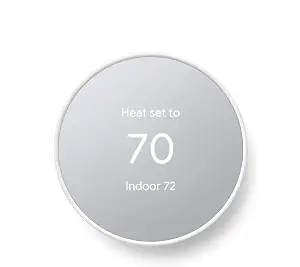
The Google Nest Thermostat in Snow is the Best Budget pick in this guide for shoppers who want app-based scheduling and remote adjustment as their main priorities. You can program an energy-efficient schedule in the Google Home app on an Android or iPhone. Family members can also change the temperature remotely from a phone, laptop, or tablet. That combination may suit a household where people want to make adjustments while away or prefer setting a schedule in an app rather than relying only on changes at the thermostat.
For a Black Friday comparison, decide whether those stated controls match the way you expect to use the product. This listing identifies Wi-Fi connectivity and compatibility with Google Assistant and all Matter-certified voice assistants. Voice control requires a compatible smart device, so check that this condition fits your setup before treating voice commands as a deciding benefit. The supplied information does not specify an included room sensor or learning schedule for this model, so focus your comparison on the features the listing does state rather than assuming an accessory or capability is part of the package.
Wiring deserves particular attention before checkout. The Nest Thermostat is designed to work without a C wire in most homes, but some systems—including heating only, cooling only, zone controlled, and heat pump systems—require a C wire or another compatible power accessory. If you are shopping during Black Friday, verify your system type and the exact product details instead of relying on a broad “Nest” description. This model earns the Best Budget label as an editorial fit for shoppers prioritizing scheduled app control and remote access among these options; it is not a claim about measured performance or the lowest offer. Choose it if those are the features you need and its wiring conditions suit your home.
Key specs
Scheduling
easily program an energy efficient schedule in the Google home app on your Android or iPhone
Remote control
Remote control lets family members change the thermostat temperature from anywhere on a phone, laptop, or tablet[1]
C-wire compatibility
The Nest Thermostat is designed to work without a C wire in most homes, but for some systems, including heating only, cooling only, zone controlled, and heat pump systems, you’ll need a C wire or other compatible power accessory.
Voice assistant compatibility
Compatible with Google Assistant and all Matter-certified voice assistants.
Voice control requirement
Voice control requires a compatible smart device.
Connectivity
Wi-Fi
Google Nest Learning Thermostat (4th gen) + Nest Temperature Sensor (2nd gen) – Obsidian
Google Nest Learning Thermostat (4th gen) + Nest Temperature Sensor (2nd gen) – Obsidian (ASIN B0D5BBYRJM)
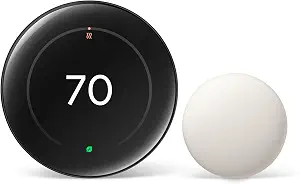
The Google Nest Learning Thermostat (4th gen) with Nest Temperature Sensor (2nd gen), in Obsidian, is the Best Overall choice here for shoppers who want a broader set of stated controls and an included sensor. It works with most 24V systems, including gas, electric, oil, forced air, heat pump, and radiant systems; a C wire is not required for installation in most homes. Those qualifications still matter: check the product information against your own equipment rather than treating “most” as a guarantee for every setup.
The included Nest Temperature Sensor (2nd gen) gives this bundle a specific room-focused use. Place the sensor in a room, then use the Google Home app to set the temperature it should reach at a certain time of day. That may be useful if your schedule depends on the comfort of a particular room rather than only a general household routine. The sensor is included with this product, so compare the exact bundle when reviewing Black Friday listings; do not assume another Nest thermostat package contains the same accessory.
For everyday control, the listing says you can adjust the thermostat from your phone while away or use your voice with an Alexa, Siri, or Google Assistant smart speaker. It is also Matter compatible for integration into a smart home, and the listing describes it as easy to install yourself. Its away-temperature feature uses the temperature outside to help find an energy-saving temperature when you are away, then returns to a comfortable temperature within an hour of your return. These features make it a versatile option for someone who values app access, voice control, and scheduled room sensing. The Best Overall label reflects that combination among the products in this guide, not a test result. Before a Black Friday purchase, weigh those conveniences against whether you will actually use the sensor and verify the exact system compatibility and package.
Key specs
System compatibility
works with most 24V systems, including gas, electric, oil, forced air, heat pump, and radiant, and no C wire is required for installation in most homes
App and voice control
Adjust on your phone from anywhere[1] or by using your voice with Alexa, Siri, or Google Assistant smart speaker[3]
Smart home support
it’s easy to install yourself and it’s Matter compatible for simple integration into your smart home[5]
Included sensor
it comes with the Nest Temperature Sensor (2nd gen)
Room temperature scheduling
put a sensor in any room and use the Google Home app to set the temp it should reach at a certain time of day
Away temperature adjustment
It uses the temperature outside to help find an energy-saving temperature when you’re away and returns to a comfortable temperature within an hour of your return[1]
Google Nest Learning Thermostat – 3rd Gen – Programmable Smart Thermostat for Home – Compatible with Alexa (Stainless Steel)
Google Nest Learning Thermostat – 3rd Gen – Programmable Smart Thermostat for Home – Compatible with Alexa (Stainless Steel) (ASIN B0DZDB98JG)
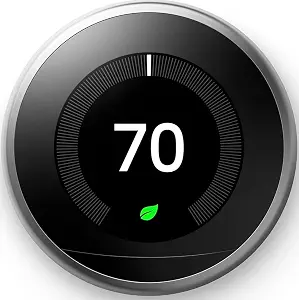
The Google Nest Learning Thermostat (3rd gen) in Stainless Steel is the Best for Learning a Schedule pick. Its defining stated feature is that it learns your schedule and preferred temperatures, then programs itself. That approach may appeal if you would rather let the thermostat build a routine around your habits than enter every scheduled setting yourself. Consider how much you want to guide the schedule: a learning approach is a different purchase priority from choosing a thermostat chiefly for a manually programmed app schedule.
The listing also describes Home/Away Assist, which automatically adjusts the thermostat to an Eco Temperature after you leave. You can change the temperature remotely from a phone, laptop, or tablet. Energy History lets you check how much energy you used and why, while HVAC monitoring sends an alert if something does not seem right with your heating and cooling systems. Those details may matter to shoppers who want schedule learning alongside access to usage information and system alerts. They are stated features, not a promise of a particular energy outcome or diagnosis.
This model works with the Nest Temperature Sensor, which is sold separately. That distinction is worth keeping in view when comparing Black Friday offers with the fourth-generation bundle in this guide: the latter explicitly includes a second-generation sensor, while this listing says its compatible sensor is a separate purchase. Do not assume the offers are equivalent based on the Nest name or a similar-looking product image. The Best for Learning a Schedule label points to its self-programming feature as the clearest reason to choose it. If you value that approach, also decide whether Energy History, HVAC alerts, and remote adjustments fit your routine, then confirm the exact model and any accessories shown in the offer.
Key specs
Scheduling
learns your schedule and the temperatures you like and programs itself
Home/Away Assist
automatically adjusts itself to an Eco Temperature after you leave
Remote control
remote control lets you change the temperature from anywhere on your phone, laptop, or tablet[1]
Energy history
With Energy History, just check your phone to see how much energy you used and why
HVAC monitoring
looks out for your heating and cooling systems; sends an alert if something doesn’t seem right
Temperature sensor compatibility
works with the Nest Temperature Sensor (sold separately)
Begin with the HVAC details you can verify
Before comparing app features or finishes, identify what kind of heating and cooling system you have and check the product’s stated compatibility. The fourth-generation Learning Thermostat listing says it works with most 24V systems, including gas, electric, oil, forced air, heat pump, and radiant, and that most homes do not need a C wire for installation. The Nest Thermostat in Snow also works without a C wire in most homes, but its listing calls out exceptions: heating-only, cooling-only, zone-controlled, and heat pump systems may need a C wire or another compatible power accessory. These qualifications are practical purchase filters, not fine print to leave until after ordering.
If you are unsure which description applies to your setup, pause before buying and confirm the system details using information available for your home. Do not infer that a model works with a system simply because another Nest model does. The provided listing for the third-generation Learning Thermostat does not specify its system compatibility, so consult the exact product information for that question rather than transferring facts from another product in this guide. For Black Friday, apply the same check to the precise listing and variant you plan to purchase. A compelling offer is only relevant if the stated compatibility fits your situation.
Choose the schedule style you will want to maintain
Think about whether you want to set a schedule yourself or prefer a thermostat that learns one. The Snow Nest Thermostat lets you program an energy-efficient schedule in the Google Home app. That may suit someone who likes to choose the planned temperatures and adjust the schedule as household routines change. By contrast, the third-generation Learning Thermostat is described as learning your schedule and preferred temperatures, then programming itself. Its Home/Away Assist also adjusts to an Eco Temperature after you leave. These are different ways of approaching routine control, so consider which better reflects your preferences rather than treating one as universally preferable.
The fourth-generation Learning Thermostat with sensor adds another scheduling consideration: you can put its included sensor in a room and set, through Google Home, the temperature that room should reach at a certain time of day. That gives the schedule a room-specific use described in the listing. During Black Friday, compare these functions against your real routine: would you enter a schedule, want the thermostat to learn one, or use a sensor for a room at a particular time? A clear answer helps prevent an attractive feature list from distracting you from how you intend to operate the thermostat.
Separate remote access from voice and smart-home needs
Remote temperature changes are stated for all three products, but the accompanying details differ. The Snow model lets family members make changes from a phone, laptop, or tablet. Both Learning Thermostat listings describe adjustment from a phone while away; the third-generation listing also specifies laptop and tablet control. If remote access is important, note the exact wording for the product you are considering and decide whether it covers your usual devices. A general product-family name is not a substitute for checking the details of a particular listing.
Voice and smart-home compatibility deserve their own check. The Snow thermostat is compatible with Google Assistant and all Matter-certified voice assistants, with voice control requiring a compatible smart device. The fourth-generation bundle lists voice control using Alexa, Siri, or Google Assistant smart speakers and says it is Matter compatible. The third-generation product name identifies Alexa compatibility. Avoid assuming that these descriptions mean every voice assistant or smart-home configuration works in the same way across models. For a Black Friday decision, match the stated compatibility to the devices and services you actually use; if voice control is not a priority, it need not outweigh schedule or sensor considerations.
Decide whether a room sensor belongs in the package
A room sensor is a meaningful point of difference between the two Learning Thermostat options described here. The fourth-generation Obsidian bundle comes with the Nest Temperature Sensor (2nd gen), and its listing explains that you can place the sensor in a room and use Google Home to schedule the temperature it should reach at a certain time of day. This could suit someone who wants to make a particular room part of the temperature plan. Consider whether that use would help your household before paying attention to a bundle’s headline.
The third-generation Learning Thermostat works with the Nest Temperature Sensor, but the sensor is sold separately. That makes package contents important when comparing Black Friday offers: check whether the specific listing is for the thermostat alone or a package that names an accessory. The Snow product facts supplied here do not describe an included sensor, so do not count on one based on the Nest brand alone. A sensor may be valuable when you expect to use the stated room scheduling, but it is not automatically a reason to choose a bundle if that function does not fit your routine.
Use Black Friday to compare the exact model and package
A Black Friday headline can make products appear interchangeable when their stated features and included accessories differ. Compare the complete model name, generation, finish, and package details shown for the offer. In this selection, the fourth-generation Learning Thermostat is paired with a second-generation temperature sensor in Obsidian; the third-generation Learning Thermostat is listed in Stainless Steel and is compatible with a sensor sold separately; the Snow Nest Thermostat has app scheduling and remote control details. Keep those distinctions visible as you review listings rather than shopping by “Nest thermostat” alone.
No promotion should be assumed from the season or from a category label. Review the exact offer presented to you and make sure the product variant matches the one you mean to buy. Then return to your priorities: system fit, wiring, schedule style, sensor use, and the controls you will use. An offer that does not include an accessory you expected may not be comparable to a bundle that does. Likewise, a feature you will not use should not drive the choice just because it appears prominently in the listing. This checklist makes a Black Friday comparison more useful without relying on an unverified discount or a broad product-family claim.
Make your Black Friday choice
Choose the Nest thermostat that fits your system and the way you want to manage temperatures: app scheduling with the Snow model, schedule learning with the third-generation model, or a fourth-generation bundle that includes a room sensor. Then verify the wiring qualifications, voice or app needs, and exact package details in the listing. Black Friday is a useful moment to compare the specific offers available, but the right choice is the variant whose stated features suit your home—not simply the one with the most prominent headline.