Best Miter Saw Buying Guide — Black Friday Deals 2026
Choosing a miter saw starts with the cuts you expect to make, not with the biggest number on a product page. A fixed-width trim project, repeated angled joints and wider crosscuts place different demands on a saw. The Metabo HPT C10FCG2, DEWALT DWS780 and SKIL MS6305-00 offer distinct combinations of blade size, bevel arrangement and stated cutting capacity. For Black Friday shopping, treat a deal as a reason to compare—not as a substitute for checking the exact model and offer. Use this guide to connect each saw’s listed details to your own material, workspace and adjustment preferences before deciding.
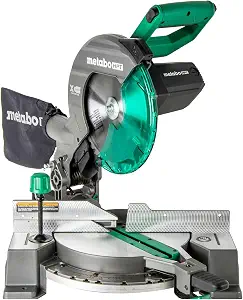
Metabo HPT 10-Inch Compound Miter Saw, 15-Amp, Single Bevel, C10FCG2
Best Budget: The Metabo HPT C10FCG2 is a 10-inch compound miter saw with a 15-Amp motor and single bevel design. It uses corded electric power at 120 volts, and its no-load speed is listed as up to 5,000 RPM. Those specifications give shoppers a clear starting point for deciding whether this model’s format suits their projects. The single bevel arrangement is an especially useful distinction to consider if you are weighing how you prefer to make angled cuts.
Its miter angle range is 0-52° left and right, while the adjustable bevel range is 0-45° left. Consider those directions alongside the cuts on your project list: the miter range describes adjustment to either side, while the bevel range provided here is to the left. If you expect to work with both types of angled cuts, decide whether those stated ranges fit the adjustments you anticipate. Avoid treating the numbers alone as a promise that every joint or material will be handled the same way.
At 23.6″L x 18.3″W x 21.8″H and 24.2 pounds, the C10FCG2 has listed dimensions and weight worth considering when you plan where it will sit and how you will handle your workspace. Those figures do not determine how much room your complete setup needs; leave space for the work and your own safe operating arrangement. The model’s Best Budget label is an editorial pick among these featured saws, not a statement about a current price or a measured value comparison.
During Black Friday, compare the exact C10FCG2 listing with the offer shown for it instead of relying on a general deal message. Confirm the model and the specifications that matter most to you: 10-inch blade size from the model name, corded 120-volt power, the stated miter range and its left-only bevel range. The saw may be a fit if those choices line up with your planned work and setup. Whether an offer is worthwhile depends on the exact listing and your own priorities, not the Best Budget label by itself.
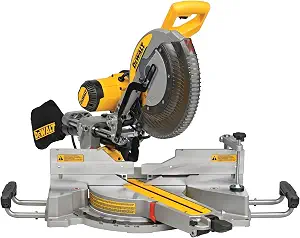
Best Overall: The DEWALT DWS780 is a 12-inch double bevel miter saw, a combination that may suit shoppers whose plans call for a larger listed blade and bevel adjustments in both directions. It runs on corded electric power and is listed at 110 volts. Its stated speed is 3800 rpm, and the blade has 80 teeth. These are useful details to verify against the kind of work you have in mind, rather than treating any single number as a guarantee of a particular result.
Think about how often your projects call for bevel cuts and whether being able to set a bevel to either side fits your working routine. The double bevel description is directly relevant to that preference. If your work mostly involves straight crosscuts or miter adjustments, you may place more weight on other parts of the listing and on your own setup. The provided cutting-angle specification is 90 degrees; it does not describe a full range of miter or bevel settings, so check the product listing for the details you need before purchase.
For Black Friday, the DWS780’s Best Overall label is an editorial choice among the three saws here, not a claim of tested or market-wide superiority. Compare the exact DWS780 listing and variant you intend to buy, and confirm that the listed 12-inch blade, corded power and double bevel arrangement match your project plan. Its 80-tooth blade detail may also be relevant as you compare the specified configurations, but it is not a substitute for checking the requirements of your material and intended cuts.
A shopper choosing between this DEWALT and the smaller-blade options should first decide whether the DWS780’s stated format suits the work, then compare the offer details. Do not assume that a Black Friday price message identifies a particular configuration or includes anything beyond the exact listing. Check the model number and available product details before making a purchase decision. If the listed specifications align with your needs, the saw’s combination of a 12-inch blade and double bevel design gives you concrete points to weigh.
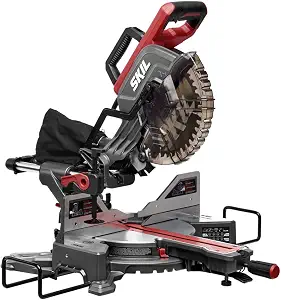
Best for Wide Crosscuts: The SKIL MS6305-00 is a 10-inch dual bevel sliding compound miter saw. Its stated cutting capacity is crosscuts in lumber up to 2×12 at 90 degrees, a specific detail that makes it a natural option to examine when your plans include wider crosscuts. That capacity is the provided specification; make sure the work you intend to do matches the stated material and angle rather than assuming it applies to every cut.
The saw is corded electric and has a listed motor speed of 4800 rpm. Its miter range reaches 50 degrees left and right, with 11 positive stops at commonly used angles. For bevel cuts, the listing names four positive stop positions at 48° and 45° left, 0°, and 45° right. Think about whether those positions correspond to the angles you use regularly. Positive stops can be part of an adjustment workflow, but the stated positions should be checked against your own cut requirements.
At 39.4 pounds, the SKIL’s listed weight can help you think through where you will set up and whether you expect to move the saw as part of your routine. Its 10-inch blade and stated wide-crosscut capacity describe different aspects of the tool: blade size alone does not tell you the full width of a supported cut. Use the capacity specification for the stated 90-degree crosscut, and consult the listing for any other cut dimensions you need to verify.
For Black Friday, the Best for Wide Crosscuts label reflects the SKIL’s stated capacity, not a test result or a claim that it is the right choice for every wide material. Compare the exact MS6305-00 listing and offer, then confirm that the specified capacity, dual bevel positions, miter range and weight suit your work. If your projects seldom call for the listed crosscut capacity, a different feature may matter more to you. Let the cuts you actually plan determine whether that capability deserves extra weight in your decision.
Key specs
Power source
Corded Electric
Motor speed
4800 rpm
Dual bevel positions
Perform cuts in four positive stop positions at 48° & 45° left, 0°, and 45° right
Cutting capacity
Cross cuts lumber up to 2×12 at 90 degrees
Miter angles
Cuts up to 50 degrees left and right with 11 positive stops at most used angles
Blade length
10 inches
Weight
39.4 pounds
Translate your project list into priorities
Before opening Black Friday deal pages, write down the materials and cut types your upcoming work is likely to involve. Separate straight crosscuts from miter cuts and bevel cuts; they are not interchangeable tasks, and a saw’s listed angle information can help you assess them separately. Note whether you expect to cut wider lumber at a right angle or spend more time making angled joints. That simple inventory makes it easier to compare the SKIL’s stated crosscut capacity with the adjustment ranges listed for the Metabo HPT and the bevel design named for the DEWALT.
Then decide which requirements are essential and which are preferences. A shopper who needs a specifically stated crosscut capacity should prioritize that information, while someone planning repeated bevel work may focus first on whether a single or double bevel arrangement fits their routine. Keep the distinction between product facts and your own expectations clear: a specification describes what the listing states, but it cannot tell you whether your particular project will be straightforward. If a necessary dimension or adjustment detail is not in the facts available here, verify it in the exact listing before buying.
Read angle settings as a work routine
Miter and bevel adjustments answer different questions when you plan a cut. The Metabo HPT lists a 0-52° miter range left and right and a bevel range of 0-45° left. The SKIL lists miter cuts up to 50 degrees on each side, along with specified dual-bevel stop positions. The DEWALT is identified as double bevel, but the supplied specifications do not give its full adjustment ranges. Compare only the details that are stated, and check the relevant listing if you need more information about a particular angle.
For Black Friday, picture the actual sequence of your work rather than choosing by a broad phrase such as compound or dual bevel. Ask yourself whether your plans call for changing bevel direction, repeatedly returning to listed positive-stop positions, or setting miter angles on both sides. The SKIL’s positive stops and the Metabo HPT’s stated left-and-right miter range may matter differently depending on that routine. No one arrangement is automatically best for every project; a useful choice is the one whose documented settings fit the cuts you expect to make.
Separate blade size from stated cut capacity
Blade size and cutting capacity are related shopping considerations, but one should not stand in for the other. The product names identify a 12-inch blade for the DEWALT and 10-inch blades for the Metabo HPT and SKIL. Of these records, the SKIL also has an explicit crosscut capacity: lumber up to 2×12 at 90 degrees. Do not infer an unlisted capacity for either other saw from blade size alone, or apply the SKIL figure to a different angle or material without confirmation.
Think about the widest cut on your project list and look for a matching, clearly stated capacity in the listing for the exact model. If your intended cut is different from the specification provided, confirm that dimension before purchasing. This check is particularly helpful during Black Friday, when a shopper may be comparing several listings quickly. A larger-looking blade figure or a promotional description does not answer every capacity question. Keep the model, material, cut angle and capacity statement together when deciding whether a saw covers your needs.
Account for power and the place you will work
All three featured saws are listed as corded electric, so a shopper comparing these options can focus on the supplied voltage and speed details without assuming that any one model is cordless. The Metabo HPT lists 120 volts and a no-load speed up to 5,000 RPM; the DEWALT lists 110 volts and 3800 rpm; the SKIL lists a motor speed of 4800 rpm. These figures have different labels and qualifications, so preserve those distinctions rather than treating them as directly equivalent measures of how a saw will perform on a particular cut.
Workspace planning is a separate part of the decision. The Metabo HPT listing provides dimensions of 23.6″L x 18.3″W x 21.8″H and a weight of 24.2 pounds; the SKIL lists a weight of 39.4 pounds. Think about where the saw will sit, the room needed for your work and whether moving it is part of your intended setup. For the DEWALT, use its listing to confirm any size or weight details you need. A Black Friday offer does not resolve practical questions about your available space or power arrangement.
Compare the exact listing before deciding
Treat each Black Friday offer as a listing to verify, not proof that a particular saw is discounted or available. Match the model number in the offer to the model you meant to compare: C10FCG2, DWS780 or MS6305-00. Then review the visible product details and confirm that the described configuration is the one you want. This is especially important when you are comparing saws with different blade sizes, bevel descriptions or capacity information, since a broad category label alone cannot settle those differences.
Next, judge the offer against your own priorities rather than against an assumed typical price. The information here does not establish sale prices, savings or promotion terms. If a feature you consider essential is unclear, pause and verify it in the exact product listing instead of filling the gap with an assumption. A sensible comparison can be brief: confirm the model, confirm the relevant specification, and decide whether the offer is worthwhile for your planned work. That approach keeps Black Friday urgency from obscuring the fit between a saw and the job.
Make your Black Friday choice
The right choice depends on which listed details answer your needs: the DEWALT’s 12-inch double bevel format, the Metabo HPT’s left-and-right miter range and compact stated dimensions, or the SKIL’s specified 2×12 crosscut capacity at 90 degrees. Recheck any detail that matters but is not provided here, then compare the exact model and offer. Black Friday can be a useful time to shop, but your cut list, workspace and adjustment preferences should make the final decision.